Unknown Conditions in Older Homes: How to Plan for Suprises Without Blowing the Budget
Unknown conditions in older homes do not wreck budgets simply because they exist. They become expensive when the project is designed, priced, or emotionally approved as though the hidden parts of the house are already understood. By the time demolition, selective...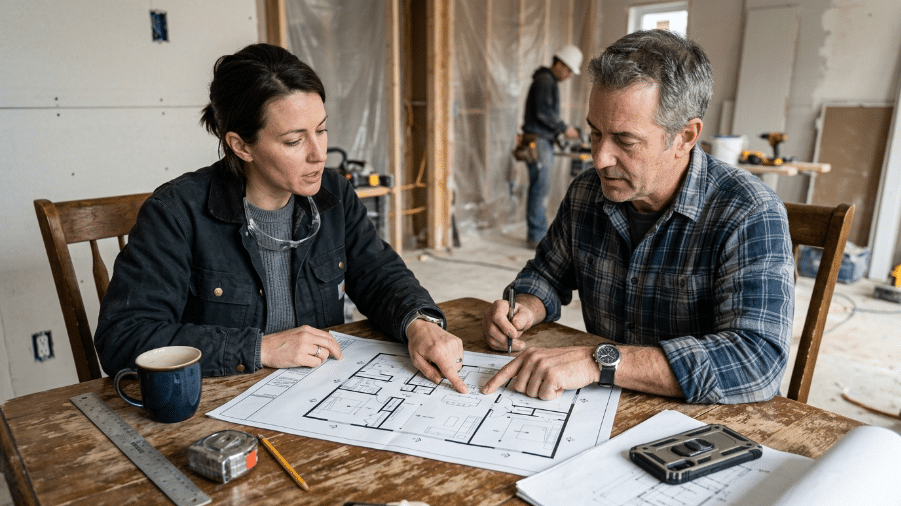
Renovation Feasibility: How to Confirm Viability Before Design Decisions Lock In
Renovation projects usually go off the rails for one reason: decisions get locked in before the real constraints are understood. Feasibility is the step that keeps that from happening by testing whether your goals are buildable, approvable, and practical before...
Renovation Scheduling: Sequencing, Long-lead Items, and Decision Timing That Prevents Delays
A renovation schedule is not a date on a calendar. It is a chain of dependencies: approvals, decisions, material lead times, trade sequencing, inspections, and the realities of working inside an existing home. When one link slips, the knock-on effects are usually...
Renovation Change Control Process: What Fair Looks Like For Both Sides
A change order is not a failure. It is a normal part of renovating an existing home, where some conditions only become clear once walls or floors are opened and where decisions can evolve as the space takes shape. What matters is whether there is a clear, fair way to...